


Osaka University of Tourism’s
Web magazine”passport”
「passport(パスポート)」は、観光や外国語、国際的な話題を切り口に、大阪観光大学の学びや取り組み、その魅力を発信するWEBマガジンです。
本学教員による記事を中心に、大学の特色や観光分野に関する知見、国際社会とつながる視点をわかりやすく紹介しています。
観光業界や外国語、国際交流に関心のある方にとって参考となる内容をお届けしていきます。
Globish – The rise of globalized English and its implications
In recent years the idea of global English, or ‘globish’ for short, has become increasingly popular in language circles, giving rise to a number of questions: What is globish? How does it differ from standard English? And if globish is indeed on the rise, what are the implications for students and teachers of the English language?
The idea of globish is that many people who study English as a second language may have differing language skills and differing cultural backgrounds, but still need to communicate effectively. Culture and common background play an important role in the which words native English speakers use and how they use them. Speakers of globish tend to avoid words and phrases that require a shared common cultural background or advanced knowledge of the language. Instead, communicating meaning clearly and simply is the main concern. Wit, humor and idioms are avoided in favor of more utilitarian, functional, and some might say bland language. Native speakers often throw caution to the wind and take the bull by the horns when conversing casually or even in business settings.
This last sentence is a good example of language that might be difficult for a speaker of globish to understand but might be commonly used by a native speaker without thinking about the difficulty a non-native speaker might face in understanding its meaning. In this case, throw caution to the wind means to take a risk, and take the bull by the horns means to face a challenge directly. Other common examples are hang out, chill, or hang, all examples that students studying abroad might encounter outside of school as their classmates invite them to meet up. Students’ understanding or misunderstanding of these words or other common yet non-globish phrases can dramatically shape their experience overseas.
Considering the important differences of globish and native speaker English, there are implications and concerns for both students and teachers alike. From the students’ perspective, it is important to identify what their goals are and understand that the language they will encounter can and will be quite different depending on the situation. If their focus is more on work or conducting international business, they may find themselves using more straightforward, clear, and easily understandable language. However, if they are studying abroad or interacting with native speakers more casually they will find that globish, while effective in business, can leave them unprepared for some social situations.
Teachers and students should understand that based on their goals, the focus and method of study may change. If their goals are primarily to have functional English for work and conducting international business, they may not want to spend hours analyzing Hollywood movies or pop songs. On the other hand, if their goals include study abroad, students should understand that many words native speakers use have multiple meanings, might not be technically correct, or may contain obscure cultural references. Understanding the reasons for using different types of English is an important and motivating part of the study process that should not be ignored.

RELATED POSTS関連記事
-

ヨーロッパを作ったトロイアの落ち武者 - ローマ・フランス・イギリス
みなさんは有名な「トロイ(トロイア)の木馬」の話をご存じでしょうか。ホメロスなどの語るギリシア神話によれば、紀元前13世紀頃、小アジア(現トルコ)にあったトロイア王国とギリシアの王国連合との間に戦...
-

「水の都」ヴェネツィアとその痕跡を訪ねる旅
世界各地には「水の都」と呼ばれる都市があります。たとえばオランダのアムステルダム、ロシアのサンクトペテルスブルク、ベルギーのブリュージュなど。かつての大阪もそうでした。ただこれらの多くは、陸上にあ...
-
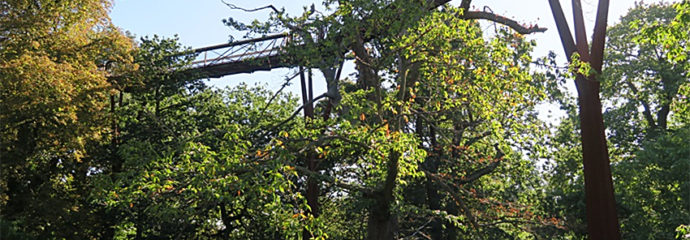
キュー・ガーデンのウォーク・ウェイ
昨年9月ロンドンに行く機会があり、帰国の飛行機が夕方発なので、午前中に郊外のキュー・ガーデンに出かけた。 世界遺産に登録されているキュー・ガーデンは、18世紀に中ごろに始まった世界で最も有名な植...
-
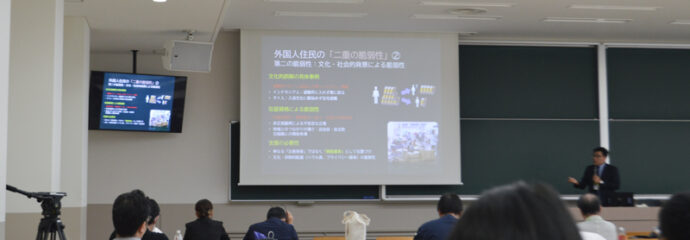
災害時における在留外国人の二重の脆弱性の克服と技能予備自衛官の活用
3月11日は東日本大震災の発災の日である。忘れることはできない。そしてわたしたちは次の災害に備えなければならない。災害の発災は起きるか起きないかの問題ではなく時間の問題である。 現在我が国には40...
-
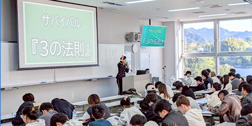
生存権保障の表れとしての災害派遣特別講義「災害に備える -いざというときに行動できる備え」を実施
大阪観光大学は、楽しむ力を核とした、世界をリードする観光学の研究教育に特化する一方、生き抜く力を育むため、大学卒業者として働く上での基礎となる知識・技能をリテラシー科目群の中で修得する初年次教育を行...
-
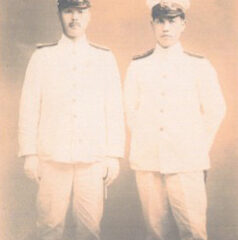
インドネシア法制史研究にかかる前田精海軍少将の個人史研究のための聞き取り(岩手県盛岡市)
本コラムで令和6年10月01日に「インドネシア法制史研究にかかる前田精海軍少将の個人史研究のための鹿児島出張」と題して鹿児島出張のことを記した。今回の記事はその続きである。 鹿児島出張後...